Pages

Showing posts with label art of culture. Show all posts

Tuesday, July 10, 2012

Browsing

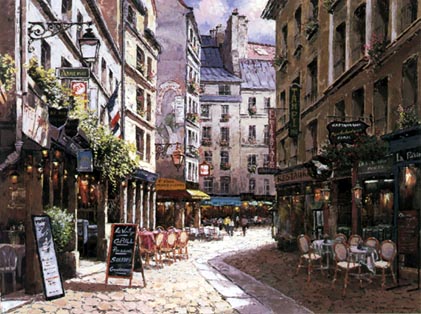
He was very concerned about it.  So concerned, in fact, that he dragged me out of Luxembourg Garden, where we had been talking for over an hour, down Boulevard St.-Michel to the main and largest Gibert-Joseph bookstore on the Boulevard and took me inside.  Until that point, I had only been in small French bookstores, akin to the small quaint bookstores in the small coastal towns of California or the Mom & Pop stores of small-town America.  But even this is not a particularly effective description.  Bookstores in Paris are actually called Libraries and what we typically call a Library is called a Bibliothèque.  There’s a librarie near my apartment that looks exactly like the bookshop in Disney’s Beauty and the Beast, which is supposed to be set in France, isn’t it?  And if you can imagine a small store-front room off of a little road, with paned windows, a painted façade, and the word Librarie painted in white or gold letters, you’re closer to the idea of a typical bookshop in Paris.


Gibert-Joseph, on the other hand, is a large store and is too large to look anything like the little libraries throughout Paris.  I’d seen the stores along St.-Michel, some for books, some for DVDs, some for music, and one a papeterie—where one buys paper and the necessary tools for writing—others for school books, some for selling and some for buying, but because there were so many, I didn’t expect the store he pulled me into to be as large as it was.  Seven floors; but that didn’t keep it from being packed with books.

In our conversation in Luxembourg, lasting a little over an hour, we had talked about literature mostly, for he had read everything.  Like most of the people who I like, and who like me, they all read more often than I do.  I’ve found through them that I’m not much of a reader.  He spoke to me about American writers, English writers, and French writers, and he wanted to know what I’d read, and what I thought about it.  I told him I’d read Zola’s L’Assemoir, which is so depressing its impossible to forget you’ve read it, and I’d read Marguerite de Navarre’s Heptameron, Chronicles by Jean Froissart—the original historian of the Hundred Years’ War, and La Cité des Dames by Christine Pizan.  We talked a long time about some of these, but he had not read all of them.  He also spoke to me about some of the American writers he’d read—the one I remember now was Virginia Woolf.  He’d read To the Lighthouse in English.  I was impressed, to say the least.

Have you ever read Woolf’s To the Lighthouse?  He said it was beautiful writing, but that he was lost on some of it.  I told him it was stream of consciousness and he asked what this meant.  So I explained, using her book as an example.  It’s when she writes everything that comes into her head, as it comes into her head, exactly the way she thinks it—rather than filtering the thoughts through organizations of structure like accepted sentence syntax and punctuation.  It was her feminist response to male structure.  He found the term ‘stream of consciousness’ most interesting.

And after we talked about literature for a while, and he shared with me that his favorite writer was Marcel Proust—and had I read anything of his?  I said I hadn’t, but for those of you who know me, this shouldn’t surprise you, since I never seem to have read what people ask me if I’ve read—and he’d seen the English cover, and are all English covers that way?

I stopped him.  « Qu’est-ce que veux-tu dire? » He responded again, “They are ugly.”  “What are?” “English book covers!”  And that’s what it was, that got him so riled, we had to leave the garden and go into several bookshops so he could prove his point.  He went the Gibert-Joseph showing me the nice, expensive French editions of books which were bound in cloth, and which he admitted were too expensive for a typical purchase, and then he went to the French translations of English books, which covers were clean and simple.  They usually had a picture on the front, with a white bar at the top with the book title, and a white bar at the bottom with the author’s name.  They all looked very much like Penguin’s Classics Series--except white, instead of black.

I had realized this before while walking by the libraries that the books all seemed to be white, and difficult to tell apart.  It occurred to me that the must be technical books of some kind, since some libraries sell merely les livres médicaux (Medical), or livres anciens et rare (Ancient and Rare), livres jeunesse (for Children).  I’d also seen people in the garden reading books, all of which seemed to have the same cover, and took them all for classics.  In fact, I’m sure I have somewhere in my notes: “The French all seem to be reading classics.  Either they’re all very cultured, or they’re catching up on the reading they should have done as young-adults.”  It turns out, and I learned through this tour of Gibert-Joseph that any French literature had these book covers, and it had nothing to do with them being medical books, or law books.  He proceeded show me all sorts of French books, all of which looked very similar.


Then, he spent a long time trying to find the English-language books, and when he did, he was proud of himself.  He touched the flashy book covers and confirmed, “See?  Ugly.”  I admit, I kind of laughed.  I liked the French literature book covers.  They were simple and clean, the way I often like my book covers, and far be it from me to purchase a book with an ugly book cover—no seriously, I won’t—but as always, in comparisons, you realize the mentality of your own culture.

I proceeded to explain that we had book covers like the French ones, too, and pulled out a few of the classics off the bookshelves to show him the covers which looked similar to his beloved French book covers.  Then I told him that we had artistic covers for best-sellers, classics, historical-fictions or non-fictions, and the like.  I pulled out a few books for some other covers, things written by Jack Kerouac or John Steinbeck which often require a book cover more artistic than the ‘classics.’  Then, of course, there were the books whose covers intended to catch your attention so you’d see them and pick them up while waiting in line, or while passing the bookshop into work.  This apparently was not the scenario of his book-buying experiences.

I realize, in retrospection that books have to be this way now.  At least in the United States, book stores are going out of business rapidly, thanks to the likes of ‘digital’ books.  And for those of us who are still holding on to our desire to turn physical pages, amazon will always save us a trip out of the house.  Except for the even smaller population of persons who regularly go into bookshops, wander the books, and purchase one or two to keep the whole thing going a little longer—my father is one such person—bookstores are becoming unnecessary.

Since coming to Paris, I have come to appreciate bookshops a little more.  There’s an art to the proper browsing of books in a bookshop which I observed my father do my whole life, but never tried or put into practice until I came to Paris.  To properly browse a bookshop and then make a purchase, one firstly needs to be somewhat knowledgeable either about books or authors and secondly cannot be searching for any book in particular or else you will never find it.  One must scan the book titles and authors until something strikes a chord, and then one must pull the book off the bookshelf, page through it, and decide if it’s something one wants to buy.  Sometimes walking around the bookshop while carrying said book helps make a decision about the purchase.


The problem with five easy steps to perfect browsing is that most Americans are rather impulsive buyers when it comes to their entertainment, and also, most working Americans don’t believe they have the time to meander through a bookshop.  If we need a cook book we go to the cooking section and find one we like.  If we’ve read a review about a good book, then we go to the bestseller stands and buy it.  But we rarely browse, we rarely have an infinite bank of knowledge about authors and we rarely buy a book we’ve never heard of or read about.  And that’s why we need catchy/flashy book covers.  If we’re in line, and something catches our eye, we’re more likely to read it and decided within seconds if it’s interesting enough to spend time reading.  The French book covers would never do for a working-class American who has so little time to spare.

Or else, that’s what we believe.  Thanks to my French friend from Luxembourg gardens, I now know this about French culture: the French don’t think that way—that they have little time to spare.  I mean, I’m sure they do think they don’t have enough time, but it doesn’t keep them from taking their time.  They browse.  They browse everything.  I found out early on that if I stood in front of the cheeses section of the grocery store for five minutes, no one would find that strange.  The old French woman next to me was doing the same thing.  Browsing the cheeses.  Furthermore, Paris is an entire city of shop windows and if something catches your eye, it’s not so strange to stop and look.  Shoes. Clothing. Jewelry. Food.—and books.  There are stalls outside of bookshops for browsing, something you rarely see in a big city in the United States.  And to me, that’s a significant cultural difference.  Browsing.  Who knew?

*13/7/12 Update: My neighbor gave me this gorgeous french phrase used to express 'window shopping': faire du lèche-vitrines.  Literally it means to lick the showcases (or shop windows).

Tuesday, July 3, 2012

Bourgeoisie Mentality


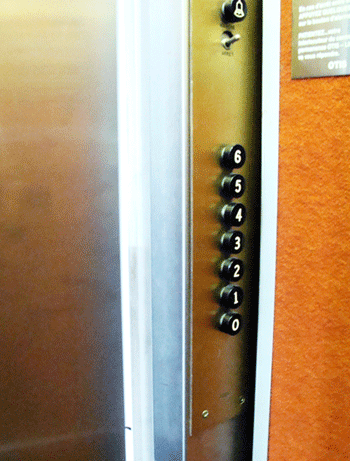
I live on one of Haussman’s boulevards in Paris in an old bourgeoisie building which fits Haussman’s charming “street-wall” façade regulations splendidly.  The ground floor is for storefronts mostly—pharmacies, bakeries, boutiques, and the like—but amidst the storefronts is a large double-door that acts as the entrance to the apartments on the floors above the magasins.  The first floor apartments have proper balconies with iron railing while the following second through fifth floors (in France, the floors start at 0) have similar façades as the first floor, sometimes with, but often without, a balcony or railing of any kind.  The apartment façade is completed by a mansard roof with a 45° angle and dormer windows.

At the end of the hallway from the street-entrance to the apartments is where the concierge lives, and where a lavishly carpeted staircase leads up to the bourgeoisie apartments.  There are two bourgeoisie apartments on each of the first five floors, one on the right of the staircase, and one on the left of the staircase.  These apartments each take up half of the floor and contain several rooms, much like any apartment would.  Whereas in the western United States, one might rent an apartment only until a house can be purchased, a Parisien is a little more like a New Yorker and rents or owns an apartment for the mere sake of living in the city.  And owning an apartment in this part of Paris is what one considers “well-off.”  There is no ill connotation to the word apartment, here.  Furthermore, it’s apparent by the red-carpeted staircase and the extravagant hallways and the red doors of the first-five stories of apartments that you are standing on the doorstep of someone who lives in Paris like one might live in Beverly Hills: no qualms about social status.


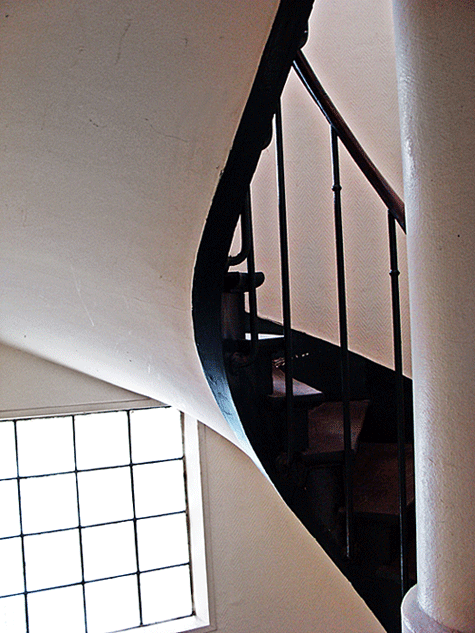
Yes, this is the apartment building where I live.  Only, I don’t take that main staircase to one of those nice bourgeoisie apartments.  Instead, I walk through the small inner courtyard off of the hallway on the ground level, where they keep the trash bins, to a door that leads to the old servant’s staircase: narrow, damp, wooden, dark—no carpet.  The staircase winds up to each floor of the building, leading to servant’s entrances to each apartment, until it comes to two floors of servant’s quarters.


(Rachel, notice apparition.  The team has debunked this as a dust particle.)

I was intrigued by the history of these old staircases before I was struck by their blatant separation of the classes.  After living in Paris for even a short amount of time the mentality one adopts concerning architecture and old buildings changes.  Though the 21st century inhabitant of my building can take an elevator up to the sixth floor and follow the hallway to the servant’s staircase up to the seventh, the elevator is such an unabashed ‘addition’ to the building, one is immediately aware that it exists for the pure sake of convenience than as a statement of social status.  I didn’t realize it until I came to Paris, but that’s what an elevator is in the United States: a sign of social status.  In America, for cultural reasons of our own, the newest and best technology is expected of the rich; but in this bourgeoisie building, the elevator is not efficient, nor is it fast, nor is the building the proud owner of the elevator (assuming buildings can feel pride).  So what one understands, as she uses the elevator every day, is that if Parisien’s could have gotten away without adding an elevator to their old buildings in the latter half of the 20th century, they would have.


As a resident of the seventh floor, I am quite pleased with the advent and addition of the elevator.  It took the maintenance of the elevator for me to understand just how pleased, for without it, all those living on the two upper floors of the building have to take all six or seven flights of stairs up to their floor.  As there is no electricity in the servant’s stairwell, it is impossible to see the steps, the wall, the handrail, or even your own hand—even during the day-time—until you get to the fourth or fifth floor, where seventh-floor skylights and glass blocks affixed into wall afford some light.  In addition, whereas the bourgeoisie staircase grants its climber a steady and gradual ascent to their floor, the servant’s stairwell is steep and too narrow to heft even groceries comfortably.  In my exodus to the seventh floor, I couldn’t help but imagine building maids, leaving their rooms on the seventh floor five minutes before their day began so they could stop outside the servant’s entrance to their employer’s apartment and catch their breath.

Servant's entrance
An American might ask, Why not take the main staircase up to the fifth floor—enjoy the climb, at least—and then take the servant’s staircase the last two levels up?  Our misunderstanding of any sort of class system makes this a fair question, albeit a non-applicable one.  There is no access to the sixth and seventh floors from the main staircase—you must take the servant’s staircase.  Furthermore, there is no secret door or hidden hallway connecting the two staircases.  Here, I get images of some young maid cleaning the steps of the main stairwell on the fifth floor, only to realize she’s forgotten something, have to go down all the steps to ground floor, out to the servants staircase, up all seven flights of stairs to grab what she needs, only to come down seven flights of stairs and up another five to get the job done.

After my own hike up the staircase, I was entirely aware of the class differentiation endured by those living atop the sixth and seventh floors.  And to be honest, the structure of the building ensures that not much has changed.  At best, the elevator was an attempt to equalize the social status of the buildings occupants, particularly in the case of the upper floors.  But even with an elevator which services the sixth floor as well as the first five, the lives of the two types of inhabitants are quite separate.  Much like what one would expect of the bourgeoisie and servants of late 19th century Paris, there is no crossing paths by way of staircase; nowadays the only interaction is the occasional ‘Bonjour’ when exiting the elevator on the ground floor.  No one is treated poorly or looked down on—it is the 21st century—it’s just the way the whole staircase/elevator system works.  But the history of bourgeoisie apartment owners and their servants who once lived above them explains the reason for that system.

While the seventh floor was most certainly the old servant’s quarters, the sixth floor of this building is an anomaly.  The hallway of the sixth and seventh étage is floored by red-clay hexagon tiles, rather than wood or carpet, the walls are textured white, and the doors are painted dark green, the color of Paris’s park benches.  On the first five floors of the building, there are two apartments per floor, each with multiple rooms; on the seventh floor there are sixteen individual doors to sixteen individual apartments.  Given that the seventh and final floor of the building has roofs angled in at 45°, the space for these sixteen apartments proves even smaller than any other floor.  These apartments are mere rooms; even ‘studio apartment’ fails to express their size, for when an American thinks of an old studio apartment, she thinks of Joe Bradley’s quaint living space in Roman Holiday, not an apartment the size of a guest bathroom.  The sixth floor has seven green doors, meaning the apartments are larger than that of the seventh floor, but still significantly smaller than that of the apartments below.  Though the exact capacity of the sixth floor is not formally documented, some old bourgeoisie buildings had one or two upper floors for middle-class families, merchants, or perhaps head-of-staff employees.  Now, the apartments on the sixth floor have been altered to create three larger apartments.

I had my mother ask me about my apartment when I first moved in, which despite my scathing review of their size, I am quite fond of.  I described it to her.  The man, who bought the old chambre de bonne, repainted it, installed a shower, a desk, and a small kitchenette.  I sent her pictures.  I received an email from my sister later in the week with connotations of the belief I was living in squalor, for, “Mom saw no toilet in the pictures.”  I explained that my toilet was across the hall in a separate room, which I had a separate key to.  In other buildings, the toilet is often shared between many tenants of the old servant’s quarters.

My own apartment
The view out of my window

Later, when I met a neighbor who moved in across the hall from me, and I started spending some time in her apartment, my suspicions of each apartment on the floor being owned and renovated separately were confirmed.  While each one of the sixteen green doors used to lead to a separate room, now, many of the rooms have been combined to create appropriate livable square-footage.  I recounted the size and shape of my neighbor’s apartment to my family, and expressed how interesting it was that three of the old chambres were combined to create her apartment.  My family asked several questions about her apartment—Why is her apartment the size of three rooms, and yours the size of one?  Why does she have a toilet, and you have to walk to a separate room?  Why does she have a shower with a curtain, and yours is merely an alcove?—all of which confused me; they were hardly applicable to the interesting fact I had just relayed about the history of the apartments.  Weren’t they more interested in the living conditions of someone living in a room a third of the size of my neighbors?  Weren’t they curious about how the old maids would have kept clean, or used the toilet?  Instead my family was preoccupied with why my neighbor’s apartment was so different from mine.

Then I realized the misconception at work in my family’s questions.  American apartment buildings are typically several stories high, and no matter which level you live on, each floor has the same blueprint.  Furthermore, each individual apartment typically has the same layout.  The structures are built to fit a certain number of apartments which apartments will house a certain number of families which families consist of a certain number of family members.  The person across from you has an apartment with a mirrored layout to yours; the person under you has an apartment with the exact layout as yours.  It wasn’t that they didn’t understand why my neighbor’s apartment was different from mine, they didn’t even fully comprehend the whole system of bourgeoisie apartments: the fact that the lower floor you inhabit, the better-off you are, the fact that the main staircase doesn’t even go to the sixth and seventh floors, the fact that in order to get to the top of the building, you are forced to take the servants entrance.  Hearing I had a studio apartment sounded more like I lived in an apartment complex with several other studio apartments, not that I lived in the top floor of a well-to-do bourgeoisie home where social class was separated by floor levels.


And it runs deeper than that.  It’s not that Americans don’t understand class and social status, in fact, our class system is just as complicated as others’.  It’s that in the United States, the poor, the middle-class and the rich don’t live together in any capacity.  The person living across the hall from you, above you, or below you, is usually at the same economic status as you are.  Even if the person who lives across from you is an immigrant, or if your child goes to a better school than the children of the family living below you, your economic status is accepted as being in the same range.  And when it isn’t anymore, and an American believes that the people moving in around them are of a lower class than they are, they move.  Take Harlem as America’s best-known example: what used to be an area inhabited by the wealthy and old-Dutch families of New York, in the 20th century became a place renowned for crime and poverty.  It’s also true that there are poorer parts of Paris, where the well-off do not live, but the difference is that they never lived there.  The difference is that the French would never consider moving out of the Luxembourg Quarter just because their new neighbors might seem to be of a lower class.  After all, the Luxembourg Quarter is the Luxembourg Quarter.

The American culture of capitalism was another road-block for my family to truly understanding my living situation.  Surely, someone realized the profit to be made from renting the top floor apartments to young students, bought up the entire floor of sixteen rooms, and renovated them to create eight apartments—for there are eight tenants currently living on this floor.  Each of the apartments would be affixed with a kitchenette, and a shower, and use a bathroom down the hall.  The fact that my neighbor’s apartment was different meant that someone made the two apartments noticeably and intentionally inégal.  This makes no sense to an American—and probably wouldn’t make sense to the French either, if the argument were presented that way.  Except this idea of snatching up this real-estate city space, improving it, and renting it out for a profit is an American mindset, not necessarily a French one.  The French might be more likely to think, “They’re just the old servant’s quarters, after all.  Writers, students, and the elderly sometimes rent them because they can’t afford anything else, but the rooms are probably better suited for storage space,”—which is perhaps true. 

But this doesn’t answer the question: If the area is unfit for living, why doesn’t someone gut the whole thing and make it fit for living?  This is, after all, what an American would do to a nice bourgeoisie apartment building like this one, in the middle of a nice area like the Luxembourg Quarter.  The French wouldn’t.  The French wouldn’t gut any building built before 1915—if they’d consider gutting any building at all.  They’ll demolish them, and tear them down, and build up around them.  But they won’t tear out the insides of a building that is just fine the way it is.  Recall my explanation about the elevator; how if the Parisien’s could have gotten away without adding one, they would have.  They are not the proud owner of the contraption, it is just a convenience.  Similarly, gutting out the servant’s quarters to create nicer apartments would be like fixing something that isn’t broken.  Let me also use my own apartment as an example: the apartment may have been wholly renovated to include electrical outlets, a kitchenette, a shower and a heater, but the floor remains the red-clay hexagon tile.

Consider the idea that it’s in the blood of American culture to improve on what isn’t broken and to consider broken what is merely less efficient.  Europeans in general—particularly when dealing with domestic buildings—are not this way.  The British have a saying they use often, “I couldn’t be bothered.”  It’s not a thoughtless, rude or dismissive statement—it is recognition that there are some things there is no reason to doing, like turning the page of  newspaper when there’s still a story on the front page that interests you, or getting up for a chocolate when there are almonds in a bowl beside you.  It’s not that the idea isn’t worth doing, or that there wouldn’t be a point to doing it, or even that doing it is a significant amount of trouble.  It’s just that it works fine the way it is, and no one is really complaining, and individual proprietors are improving the apartments little by little, so why should anyone be bothered?


I lost my audience long before I could accurately explain these cultural differences I find so fascinating: something as simple as a staircase or whether or not an apartment has a toilet is attached not only to history but to mentality—a mentality which runs deep.  Buildings aren’t just about form or function; they aren’t just about changing and being changed.  In fact, it’s a little more than that.  Carl Jung afforded to artists the responsibility of tapping into the collective unconscious and presenting its truths to the world, but it turns out that cultural experience is organized not only by painting or tapestry, but by the very halls we walk in, and the very stairs we climb.  The detailed truths of how we consider the world around us are presented to us by small inefficient elevators, by the remnants of old doors in the hallway, and by whether or not we would gut our seventh-floor servant’s quarters for a profit.  The very fact that an American would do something so differently than it has been done here is proof that our histories have a place in our cultures, that our cultures have a place in our mentality, and that our mentality shapes the world we inhabit.

Friday, March 23, 2012

Symbols of France

Le Republique Francaise: Liberté – Égalité – Fraternité
These are three values not to be ignored in France: Liberty - Equality - Brotherhood.  I think these are probably the values France has ideally held onto most since the French Revolution.

Le drapeau tricolore sous l'arc de triomphe; I have yet to find out why exactly this is done, but it is most certainly a sign of nationalism and it can be seen from so many places within the city.

Fleur-de-lis on the coat of arms of France from ancient times.  Harks back to ancient France, that history and the "legacy" involved.

Lady Liberty - Marianne is an important symbol of France, here she leads men into one of the Revolutions France underwent during the 16th-19th centuries.


Notre Dame, made famous by Victor Hugo after being more or less abandoned after the French Revolution.  A sign of Catholicism in France, but also a National symbol of Gothic architecture.

Blue Virgin Window at Chatres Cathedral - survived from the Romanesque Cathedral after Chartes burned down several times; the Cathedral was not looted during the French Revolution, neither was it destroyed during either of the World Wars.  Once contained the shroud of Mary, given to Charlemagne as a gift from Jerusalem.

Reims Cathedral where the Kings of France--starting with Clovis--were coronated.  This is the third Cathedral on the site, from the 13th century; the cathedral was made bigger for the crowds that would come to coronations.

Joan d'Arc has been a consistent symbol in France, her story being used by everyone from Liberals to conservatives, to the Vichy Regime to French Resistance fighters.
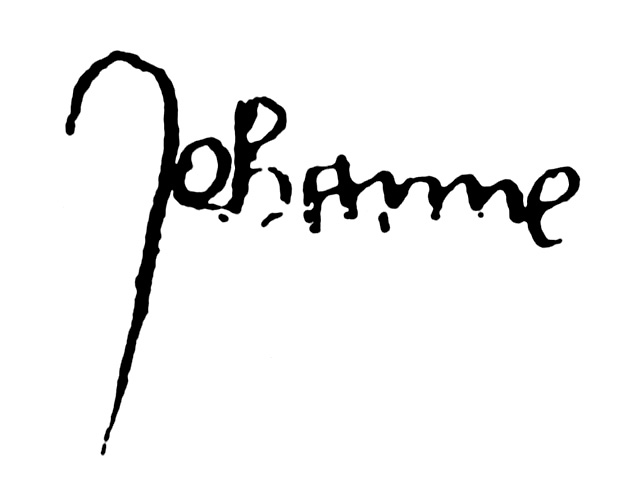
Her signature - 'Jehanne' or 'Johanne'  (I just thought this was awesome.)

In all honesty, when we visited the 'Beauty and Belief' exhibit, and we were asked about symbols from our Field Study sites, I had no idea what to say about France.  It didn't take me long when I really started thinking about it, but it did take me a little time to find out why France used some of these symbols to represent their values, ideals, or history.

There's a lot of nationalism in France, a lot of pride for being French and a LOT of history that gets them to those ideals, values and pride.  This doesn't really surprise me.  There are a lot of things not to be proud of in any country's history, but there's so much more to recognize in France as 'legacy.'  Marianne, France's equivalent to our 'Columbia' or Britain's 'Britannia' is the female personification of France, she is valiant and courageous, she is loyal and she is fiercely behind France and its ideals.  She, like Athena, is a warrior, ready to fight if necessary.

French history is also very important, and because of a rocky past, I think the French are big on ideals.  I think Americans are, too, so maybe that's something we can understand about each other.  The difference is the way we interpret or show those ideals, which is something I don't think we always understand about each other.  But in general, the French choose to remember about their history, the things that make them proud of that history, and I think that's par for the course for any country's national memory.  For France, this includes the Cathedrals, even though so much of France are no longer practicing Catholics; this includes Joan d'Arc, even though the French handed her over to the English to be executed.  This includes the values of the French Revolution: Liberté – Égalité – Fraternité, even though those ideals came at such a high cost.  It is interesting that sometimes a culture's most valued ideals are born out of their darkest moments, perhaps when they realize they need them most.

Charles de Gaulle - Regarded as the leader of the Resistance and 'savior' of France after WWII; in reality the history isn't that simple.
Terrein - see my post on Terrein, and the value of 'mon pays.'
The French Resistance during WWII was regarded as being widespread and entirely influential of the eventual dispelling of Germans from France, in reality, most French were not part of the Resistance throughout the occupation.
La rue - Community, and small shops; "small town life" is still important in France, even in big cities.  There is a lot of value put on what we would call 'Mom and Pop shops' or bakeries, and having places you frequent.
Conversation.  Need I say more?  The French will make reservations at a restaurant, and once the restaurant fills there is not 'wait' because guests are expected to stay until the close of the restaurant--doing what?  Talking.  I was born for this place.


Not all values are based off of history, though they are usually based in history.  One such value is the value of mon pays--where someone is from.  I think this comes from a long line of defining oneself as not 'French' necessarily but a Parisien or a Poitevin or a -- no, I'm not going to play this game.  Take a gander at this website which is awesome: (http://www.habitants.fr/index.php).  My point is, ultimately, that there's something to defining yourself against the land you've lived in, rather than the nation constructed around that land.

Furthermore, where did the French get their love for their language?

Acadamie francaise - it's main reason for being is to preserve the French language.  I like to think that this is why direct translations of the French language into English sound like old English--or how we USED to speak, and don't anymore.  Without Academie Francaise, I wonder what French would sound like.

The French are profoundly attached to and proud of their language, I think the existence of the Academie Francaise more or less proves that.  We don't have an English Academy making sure we Americans don't ruin the good language of English--though, I'm fairly certain the English DO think we've ruined their language.  The point is, we don't have one.  We might learn about old English, but that's just the point--it's old.  I'm not sure if the love of talking and conversing about anything and everything is where this pride of language came from, but maybe that's something I'll have to ask.

So how will knowing these symbols help me on my Field Study?  Well, there's something to knowing these values exist, and that they're different from our own.  I think there's something else to knowing the basics so that when you get to your chosen country of study you're not always asking the 'What is that?' question, but asking the 'Why is that?' question.  We waste a lot of time asking, 'What is that?' when the really interesting part is finding out "Why is that?" because that is where, in my opinion, the culture is found.

Thursday, March 15, 2012

How do they do it?

There is nothing to say there is nothing to say there is nothing to say there is nothing to say there is nothing to say there is nothing to say there is nothing to say there is nothing to say there is nothing to say there is nothing to say there is nothing to say there is nothing to say.

Someone told me once that if you just start typing whatever you're thinking or feeling that eventually you'll think of something to write.  I don't KNOW that that's true, but then again, I only typed 'there is nothing to say' a dozen times (I'm not counting to make sure) before becoming bored, so maybe that's the cure for writing.  Boredom.

I've been reading a couple of IRB Applications for class tomorrow and have acquired  a few ideas from see how others dealt with the application for my own application, particularly in the Methods and Procedures section, Michael's IRB gave me some ideas of how to explain my methods a little more completely.  I've always been rather cautious so making plans I know will change seems like a waste of time to me.  This is why I have a hard time 'proposing' a project that I don't know for sure will work, and I have a hard time 'proposing' how I will do things, when in reality I have no idea if that's how they'll get done.  It's debilitating for me in this class, since so much of the class is merely 'proposing.'  I just have to get used to the idea that everyone else, not just me, knows that the project will change, and they don't expect me to stick to the proposal once/if I find a better way of doing things.

--

I read today about "The Unforgotten War," that is WWII and its application in France.  Did you know that in France, on paper, citizens do not have a religion, a skin color or an ethnicity?  This was a policy put in place after the second World War to keep the Holocaust from happening again.  If anyone asked the French to round up all their Jews again they could simply say, 'We have no idea who is Jewish.'  If someone asked them to round up all their Arab immigrants they could say, 'Once someone receives their French citizenship, they are French.  We do not know who is Arab.'  And if that someone said to take everyone in with dark skin, they could simply respond, 'But they are French, too.'  I love that.  I love that on paper there is no distinction between any French citizen.  I think this, also, that this is a significant governmental and cultural shift because of history, and there's a lot of that in France, but this is more recent.  A 20th century upgrade, as it were.

I also learned that while the largest number of Jews were rounded up and killed in France than any other Western European country, more than two-thirds of France's Jews survived World War II, meaning many of the French never turned in their neighbors, hid away children, or smuggled Jews out of the country.  This is in comparison to the less than 25% of Jews in Holland or Belgium surviving the war.  I think this is heartening given the anti-Semite reputation the French have.  That's another thing about learning about people and culture: stereotypes may exist for a reason, but they're so much more complex than that, and one must never assume a stereotype for any individual because its assumed of the group.  I would add, that stereotypes ought to be discarded all together, though caution should always be taken with everyone you come into contact with.

War is kind of a bizarre thing, and I think every culture is significantly altered by their history of war, the way they wage war, whether they've been beat or whether they've been victorious, whether they're proud or ashamed of said victories or defeats, the money they've received, the men they've lost, the way in which a war was ended whether by marriage, treaty, or stalemate.  I think this is why we organize our study of history often times around, during and between major wars.  In France, we study the Gallic Wars, the Hundred Years War, the Wars of Religion, the Thirty Years War, the French Revolution, the Napoleonic Wars, the Franco-Prussian War, World Wars I and II, the Wars in Indochina, the War in Algeria.  And Honestly, most wars that France has been involved in, they've lost. They've LOST most of their wars.  But they're France, how is this possible?  What I find so fascinating about the French is that most countries, heck, most CULTURES would be decimated and destroyed and scattered and lost by such staggering wars.  Not the French.  They're still one of our leading "cultures" one of the Western European countries we still find synonymous with the word "culture."  What makes France so fascinating is that despite all their loss, the elements of their culture have always pulled them out ahead, have always dug them out of the rubble so to speak, have always persevered.  That isn't easy, and what's more they make it LOOK easy.

What is it about their culture that does it?  I guess what's what I want to find out.

Tuesday, March 13, 2012

Reciprocity, etc.

I'm not counting the days until Paris, I'm counting down the days until London where I get to spend a week and a half with my two best friends before my Field Study.  But if you tack on 9 days (which is 48 days), that's how many days until I'll be in Paris.  And, as it stands, with no place to live.  I'm nervous, but not nervous enough.

I've been spending some time looking at two blogs.  One of them is The Spirit of Black Paris which is not only fascinating but extremely helpful, and the other is Invisible Paris which has little to do with Black Paris, but has to do with places in Paris one isn't typically allowed to enter.  Invisible Paris gets me excited just to be in the city but The Spirit of Black Paris gets me excited to actually begin studying the people who I want to study.  I feel like I need to get started now, and I'm sure I could, but I just don't have the time.  Other classes and work and even attending classes seem very unimportant right now, as my mind begins shifting to a new perspective--that is, new for me--as I take into account a lot of the changes in my life that will be taking place in a little over a month.  And I have the most pounding headache.

The thing is, I'm not terribly excited, though people keep telling me I should be.

I've got two contracts set up, one called "Urban Studies in Paris" and the other "Writing Paris" and both are focusing on an American Studies methodology.  Urban Studies, in general is going to have an American Studies emphasis as I read about the Urban Studies theories, and then focus it a little into application of Paris.  The other class is going to help me hone my writing skills with an American Studies methodology for readers of any discipline.  This means treating places, art, music, food, etc. as 'artifacts' that are studied and written about from all four viewpoints of the methodology: its archive, the institution in which it was created or formed, textual analysis--the analysis of the piece itself sans all other influence, and the social theories surrounding it.

Been thinking about reciprocity since yesterday's lecture.  The lecture didn't become very interesting to me until the very end when the three types of reciprocity: balanced, negative, and generalized.  I couldn't help but think of this idea in terms of friendships, because that's what I think of most things in terms of.  Our culture is not one that practices generalized reciprocity in terms of "things," but we do practice it in terms of speech.  If someone continually compliments us, we tend to compliment back, and when we don't you can expect to have some rather offended or hurt people walking about.

For example, I remember my first year in college, when I'd come from a culture of generalized verbal reciprocity (also balanced verbal reciprocity) where compliments on dress, hair, makeup, general good-looking-ness etc. was always paid, particularly to those who paid it to you.  It was balanced in the sense that you did for others what they did for you, but it was generalized in the sense that you didn't worry about being nice to someone as many times as they had been nice to you, you just assumed that between the two of you the complements would even out over time. But I suppose that "services" were included in this, too: help with homework, giving of school notes, listening about boyfriend troubles, back rubs, etc.  No one only gave back rubs if the other had given them a back rub lately.  All these things were given easily, with the realization that it would be paid back eventually.  My first year of college was not like this.  Here I was, complementing people up the wazoo, because it was what I was used to.  Giving them service in one way or another, because it was what I was used to.  Hours of listening to issues, time spent making dinners or baking desserts, giving of notes, etc.  But after months I realized how tired I was.  And years later I realized that if one assumes in generalized reciprocity that you will be repaid and then at some point you realize that you aren't being repaid at all, you feel taken advantage of.  I think this occurs when you are operating in cultural norms that no one else is operating in.  Realizing that I was in a new, much more selfish, culture, I had to switch to 'balanced' reciprocity so I would be used up, taken advantage of, or simply tired out with no benefit to me.  You can only give so long before you've got nothing left, as it goes.

However, I think I most often experience the consequences of negative reciprocity, both because I often give too much, and because sometimes I am overwhelmed by others giving too much.  These friendships strain me.  Sometimes I give too much in a friendship, not realizing that that level of friendship cannot be repaid at the same rate as I am able to give.  I expect too much of my friends sometimes, and then I feel misused because I'm not being "treated right," whatever that means.  But the opposite happens, too, where someone is willing to give too much to me too soon for my comfort, and I don't feel I know them well enough to pay back the friendship in meaningful ways, therefore overwhelming me into feeling 'smothered' by them, or simply bothered by them because they're moving too quickly for me.  This is not specific to romantic relationships--this happens to me on all sorts of levels.

But this isn't to say that I think balanced reciprocity is necessarily the best of the three, for especially in friendships no one would be keeping tally.  All our best friendships should probably be some form of generalized reciprocity or a mix of generalized and balanced.  I am good with casual relationships that progress slowly and naturally.  This is one reason I'm not too worried about being the cause of negative reciprocity.  In 3 months I don't feel anyone will expect of me a life-altering friendship, and I also don't believe I will expect that of others.

Also, going to France, which is "western" in its mindsets, and living in Paris which is hardly a place where I might be expected to give more because I'm an American, or possibly give too much because I'm an American is less likely to happen.  I know that in some areas, bringing too much money in might make a family dependent on that money.  Though I don't yet know my living arrangement, I'm fairly certain this won't be the case.  If anything, people will see me as the poor student, much like is the culture in the states.  However, I realize this, too, can lead to some being overly generous, which is something not to take advantage of.

Anyway, these are some interesting things to give some thought to, which I'll continue doing.

Wednesday, February 15, 2012

Language

I first fell in love with French when I was learning the phrase, 'Je suis enchantée de faire votre connaissance.'  I had been back at home in Los Angeles for six months from a study abroad in London and had another two months to go until I returned to Provo.  Learning is all that has ever made me particularly happy, and after six months of not being in school, I was reeling with dissatisfaction.  Perhaps sensing my displeasure with life, and aware I'd be taking French in the Fall, my parents gifted me one of those CD-ROM 'Learn a Language' programs for my birthday to get me started.

I worked about four to six hours every day at a Law Office, and when I came home, I'd practice French for hours, lying across my parents bed repeating words and phrases.  I loved it.  My roommate collects stories I tell her of my prayers with God; her favorite is the story of the week I prayed every night for God to help me get the pronunciation of the French 'r' down.  I can still remember the first time I said 'rouge.'

Fairly quickly, I familiarized myself with most of the disks of the program, and swapped them out depending on whether I wanted to learn phrases, 'Au secours!' (Help!) which is another great direct-translation, or vocabulary, 'souris' (mouse).

It was a phrase day when I found, 'Je suis enchantée de faire votre connaissance.'  I had NO idea what this meant.  I knew it was supposed to mean something about being enchanted, and maybe meeting someone, but I hardly understood the sentence syntax or meaning of the individual words.  I looked it up online.  It means "I'm pleased to meet you," but more literally, "I am enchanted to make your knowledge/acquaintance."  I was smitten.  Someone could tell me I was wrong now, and I'd probably agree with them, but at the time this phrase meant something a lot more than "I'm glad to meet you."  It was saying something more like, "I'm enchanted to know you exist."  What a glorious idea.  Because if Descartes is right, and 'Je pense donc je suis,' that means that I am my knowledge.  I'm only as good as my knowledge, and they're pleased they know about it.

French wasn't about learning another language that day, it was about learning a new way of thinking, a new way of seeing people, and a new way of seeing the world.  How could you ever have a bad day with people being pleased to know you exist and other such grandiose phrases?  Granted, I've now been studying French for almost two years and I don't know that I could make the same argument about this phrase, knowing what I know about the meaning of french words.  But it doesn't really matter that my direct translation was a little off, because I believed it, and it carried me through two years of learning a language that more often than not frustrates me, and makes me feel ridiculously incapable and inept.  I hate it.  I mean, I hate it.  I hate the homework, and I hate that I never know how to say what I want quickly enough.  I hate that I can't understand most people speaking the same language I've been studying for two years, and I hate that I understand concepts I can't put into practice.  I hate getting up in front of people and fumbling with the words and the grammar.  I really hate it.

But then--I'll accidentally forget time.  I'll forget the other homework I've got looming over my head, and I'll get stuck in my grammar book, and I'll marvel over this language that makes no sense some days, and all the sense in the world others.  I'll find a book written in french about the history of jazz, and I'll read seven pages of it before I realize I didn't once look up the definition of a word, or wonder what the hell a series of words in a particular order meant.  I'll forget about what needs doing and realize how long its been since I had to get the direct translation for "I'm glad to meet you," and I'm back lying across my parents' bed, pronouncing rouge for the very first time.

Monday, January 30, 2012

The art of culture: Communication

In class we were discussing how what you do (and don't do) by means of gathering information in your field research will blatantly affect what information you come out of your field study with.  This is particularly pertinent to my project since what I think it means to be American will directly impact how I interpret the experiences of other Americans abroad.  Whether this has something to do with who I converse with, what books I read, what I interpret to be significant (or not significant), or whether it has to do with looking at African-American expatriates through a Anglo-American lens.

But just because you aren't like the people you study, and just because your field information will be skewed because of who you are doesn't mean you shouldn't do the research.  Though, I do think that it might be helpful to get a better handle on what I think it means to be an American so I can put it aside and reassess American-ness through someone else's perspective.

There are ten elements of culture we discussed today, and the first I want to discuss is Communication.  As I work in the Field Study office, I was going through some of Malcolm's files and found a worksheet, "Contrast Your Communication Styles with Host Nationals."  I don't know about my Host Culture's communication styles yet, so I won't guess.  What I will do is compare mine to my Home Country, which the worksheet also facilitates.

Direct/Indirect Communication

Me: First, I think I'm a low-context communicator about 95% of the time.  I use direct communication: what I say is what I mean, I do not beat around the bush.  I'm not manipulative or passive aggressive when communicating with others.  It doesn't help me, so I don't do it.  And though I can often read what other people want when they communicate with me, unless they use direct communication, I rarely--if ever--humor/indulge them with an answer.  I dislike acting on others' indirect communication because it is so often used against you if you should misinterpret.  Because I am not easily offended, this doesn't usually end up hurting me if they should decide to tell me what they want in a more direct manner later on.

Home: In class today it was said that Americans tend to be more or less "direct" communicators (i.e. low-context communicators).  You can take most of what Americans say at face value and just believe them.  I agree about this in comparison to many other cultures, however, I think that if you want to cut it a different way, women tend to be thought of as 'indirect communicators' while men tend to be thought of as 'direct communicators.'  Also, perhaps privileged Anglo-Americans feel more comfortable being direct communicators while less privileged-class Americans tend to be indirect communicators.  I believe this because I believe that indirect communication is a consequence of not being allowed/permitted/accepted as direct communicators.

Linear/Circular Communication

Me: I'd say it depends on the point I'm trying to get across, that I am both linear and circular.  I say what I need to say often, but I am willing to have a circular conversation, and most conversations for the sake of conversation end up being circular in my book.  Also, as I tell stories, circular motion is often the only way to go, but I reserve this for written stories, as most people's attention spans are two short-lived for circular story telling.

Home: It varies from person to person.  I don't know that you can say an American communicates linearly or circularly.  I'd say that like me, most people in my home country fall somewhere in the middle of the spectrum, using each when it is most applicable or appropriate.

Detached/Attached Communication

Me: This is a real issue for me as I am both, and I think this is why my form of communication really 1.) confuses people, 2.) is often misread/misunderstood, 3.) is responded to negatively.  Detached communication, "issues are discussed with calmness and objectivity.  Emotion is kept at a minimum, and objectivity is preferred over subjectivity.  People who use detached communication may feel that they are just being rational and fair."  Attached: "issues are discussed with a high level of emotion and feeling.  People communicating this way think they are showing sincerity or personal concern for the topic and the person with whom they are interacting."  Now, what I do: I am usually detached from my topic.  I am very objective, so I will present a side of a conversation without knowing if I fully believe it.  I almost always feel very calm and objective when conversing with others.  HOWEVER, I discuss everything with lots of passion.  I therefore come across as being factual and opinionated.  Because I express my 'argument' with passion, people expect it is my personal opinion, and so have a difficult time arguing against it for fear of offending me.  Because I remain unaffiliated with most conversation topics (in my mind), almost always feel I am being rational and fair by presenting a side of the issue--whether I believe it or not--while others interpret my passion as perhaps decided and unchangeable.  Because these two modes of communication are usually considered contrary, I am very often misunderstood as disagreeing with someone when in actuality I was agreeing with them.  I get many negative reactions to things I am saying because people interpret my indirect communication incorrectly rather than listen to the words I am actually saying.  Confusing enough?  Yes, that's what I've been told.

Home: I think people tend to be one or the other.  I have a hard time with people who show little-to-no passion about anything.  But I can see how my form of communication could get extremely confusing.  I think women, homes, or religious institutions tend to communicate in an 'attached' manner.  Though, to be fair, people who tend towards feeling or emotion are more 'attached' communicators.  However, there is a good potion of our culture that prides itself in and expects detached communication.  You find this in the work place, or in the education system.  There are certain places where either/or are expected or appropriate within our culture.

Idea-oriented/Relationship-oriented

Me: I am 100% an idea-oriented communicator.  "In this form of communication, disagreement with ideas is stated directly, with the assumption that only the idea, not the person from whom the idea came, is being attacked."  However, I am very aware that others are relationship-oriented where "disagreeing with an idea is viewed the same as disagreeing with the person who originated it.  Intellectual disagreement in particular is handled more subtly and indirectly.  This communication style emphasizes interpersonal harmony and strives to maintain the relationship between people."  I consider idea-oriented communication the ability to "play" with ideas, to flesh them out, to beat them down, to roll them out and stretch them, and see what they can go through in order to decide if it's something I believe.  Others become very frustrated by this tendency I have because they think I am attacking them, which is never ever the case.  Others, when they argue with me about one of my ideas, interpret my response as offended, when really it's just the here-to-fore discussed 'passion.'  This is my biggest communication problem with my family as I play with ideas, while treating the relationship unaffiliated with the ideas.  My family rarely feels this way, and often thinks I am attacking their opinion.

Home: I think most people are relationship-oriented by socialization.  I don't know how I missed the boat.  I think it's less okay to be unable to be idea-oriented in a collaborative work environment though you always have the person in your work group who is unable to take idea-criticism and therefore is always offended by one thing or another.  Realizing that most are relationship-oriented makes me feel very boxed-in and caged, as I have to think and re-think the way I present a thought I have so not to offend anyone which usually skews the correct and clear communication of the idea itself.  However, when I try to by myself and state an idea the way I think it, I am not usually met with acceptance.  I think in desire to maintain relationships people have with others through this type of communication no one really ends up being themselves, but a person with layers and layers of filters.  I have yet to find a good thing about this, though I know there should be.  (I'll give it more thought.)

Signing off for now, to continue to think about communication styles.